
Fast, Reliable Duct Repair & Sealing Across Plano
Duct repair and sealing in Plano typically costs $280–$680 for most residential jobs, with same-day or next-day scheduling available throughout Collin County. If your Plano home’s HVAC struggles to maintain even temperatures, your energy bills have climbed without explanation, or you’re hearing air movement in walls and ceilings where it shouldn’t be, you likely have compromised ductwork leaking conditioned air into your attic or crawlspace.
We’re Beacon Air Duct Cleaning Service Dallas Fort Worth, and our Duct Repair & Sealing team works Plano properties weekly. From the original ranch homes off Parker Road in 75074 to the executive properties near Legacy West in 75024, we know the specific failure patterns this city’s housing stock produces. Jerry Sanders, our owner and lead technician, handles every job personally — the voice you hear when you call (888) 247-5308 is the same person who’ll be in your attic with a flashlight and a manometer. We’ve built our reputation on 14 years of focused duct specialization, backed by 844 verified reviews averaging 4.9 stars, and we don’t hand off work to subcontractors or rotating crews.
Why Beacon Air Duct Cleaning Service Dallas Fort Worth Is Plano’s Preferred Duct Repair & Sealing Company
Plano homeowners have specific reasons for choosing us over franchise operations or general handyman services. Our 844 verified customer reviews at 4.9 stars include dozens from Plano addresses across ZIP codes 75023, 75024, 75093, and 75074 — homeowners who’ve watched Jerry Sanders personally trace duct runs, explain pressure differentials, and show before-and-after airflow readings on digital manometers. That transparency matters in a market where low-bid duct “cleaning” specials often mask bait-and-switch operations.
Response time to Plano runs same-day or next-day in most cases. We’re based in Irving, with regular routes through the Dallas North Tollway and President George Bush Turnpike corridors that put us in west Plano in under 35 minutes and east Plano in roughly 45. We don’t charge travel fees for Plano calls.
Our local knowledge runs deeper than GPS coordinates. We know that homes in Plano’s 75074 and 75075 ZIP codes — the Willow Bend area, Parker Road corridors, and central Plano subdivisions — carry original flex duct systems installed during the city’s 1975–1995 residential build-out. These systems are now 30–45 years old, well past the 15–25 year functional lifespan the industry recognizes. We also know that west Plano’s 75093 and 75024 properties near the Shops at Legacy and Legacy West present entirely different challenges: multi-zone systems with longer supply runs, more return-air drops, and significantly more complex balancing requirements. That two-era split means Plano has an unusually high proportion of duct systems that are either critically aged or critically oversized relative to neighboring suburbs — and generic repair advice from out-of-market websites won’t address either condition accurately.
Our Duct Repair & Sealing Services in Plano
Duct Sealing
Plano’s climate punishes leaky ductwork harder than most Texas markets. Attic temperatures of 140–150°F from June through September force HVAC systems to run longer cycles, and every cubic foot of cooled air escaping through unsealed joints or deteriorated mastic is air your compressor worked overtime to produce. Our duct sealing service targets the plenum connections, collar joints, and register boots where leakage typically concentrates. We pressure-test the system before and after sealing, using digital manometers to document actual CFM recovery. For Plano’s older east-side homes, this often reveals 25–35% airflow loss — the equivalent of cooling your attic instead of your bedrooms.
Flex Duct Repair
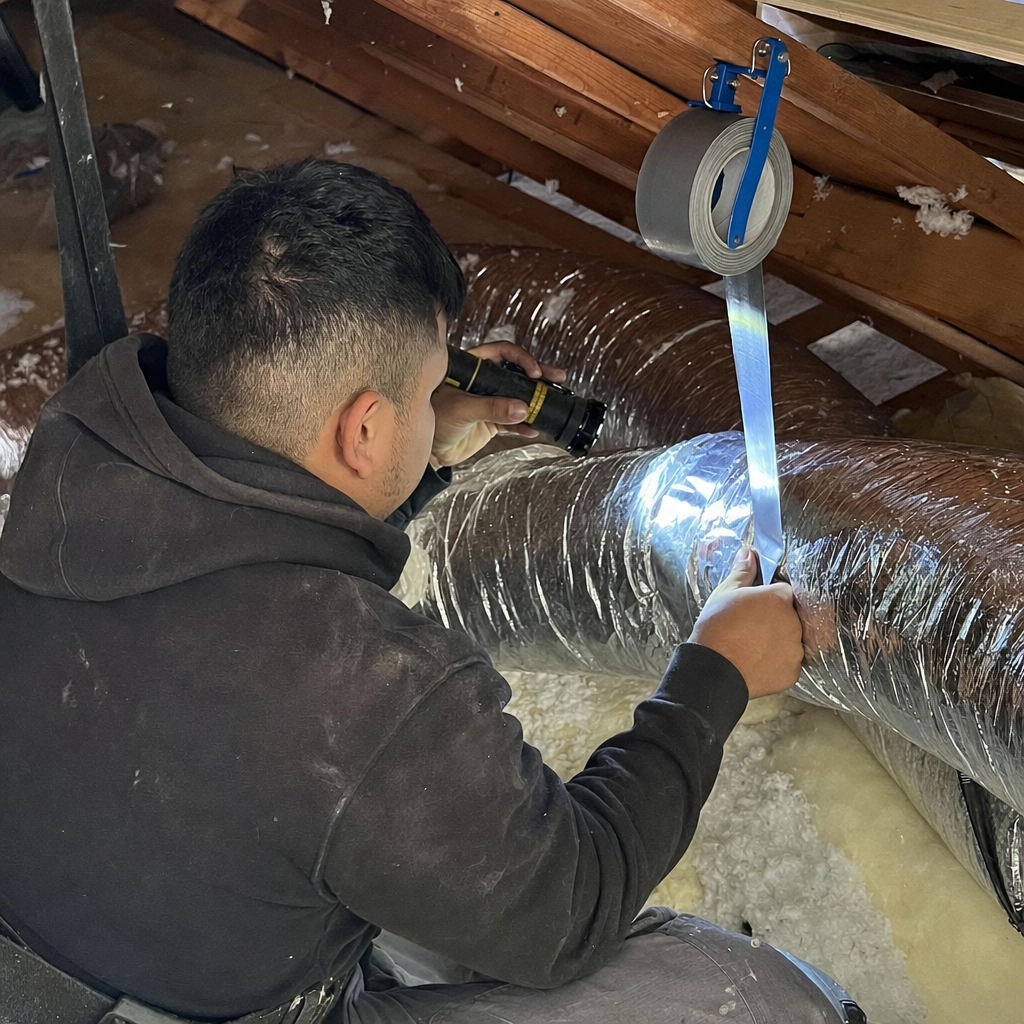
This is where Plano’s local geology becomes critical. In Plano’s 1970s–1980s east-side neighborhoods, original flex duct was often installed with inadequate support spacing — 8-foot spans instead of the 4-foot maximum the manufacturers specify. Decades of foundation movement from Collin County’s expansive Blackland Prairie clay soil have shifted framing, stretched runs, and created sag points that kink the inner liner or pull it apart at collar joints entirely. On a job in Plano’s 75074 neighborhood off Parker Road, we found a homeowner’s 1982 flex duct system had pulled apart at a collar joint, dumping conditioned air into the attic. We applied mastic sealant and re-secured the section with mechanical fasteners, restoring flow to the master bedroom. Our tech noted the sagging runs looked textbook for local foundation movement. Flex duct repair in Plano isn’t simply replacement — it’s diagnosis of why the original failure occurred, then correction of the support and routing conditions that caused it.
Metal Duct Repair
West Plano’s larger custom homes from the 1990s and 2000s more commonly use galvanized steel trunk lines with flex duct branch takeoffs. These metal systems don’t suffer the same sag-and-kink failures as flex, but they develop their own Plano-specific problems: thermal expansion stress cracks at seams and corners after thousands of 140°F summer attic cycles; corroded spot-welds from condensation where supply air meets superheated metal; and disconnected takeoff collars where vibration has worked fasteners loose over years of continuous fan operation. We repair metal duct with proper sheet-metal patching, mechanical fastening, and high-temperature sealants rated for attic exposure — not the foil tape that degrades in six months of Plano heat.
Duct Insulation Repair & Replacement
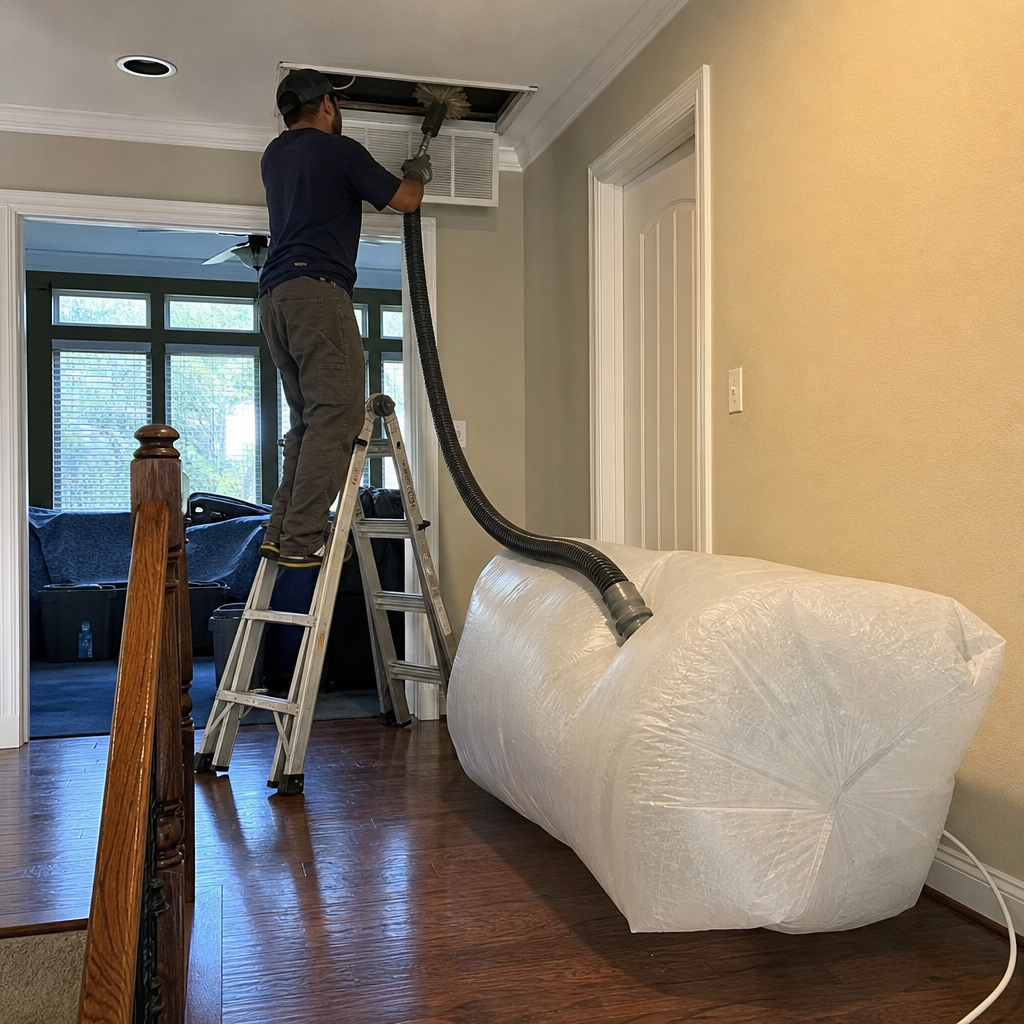
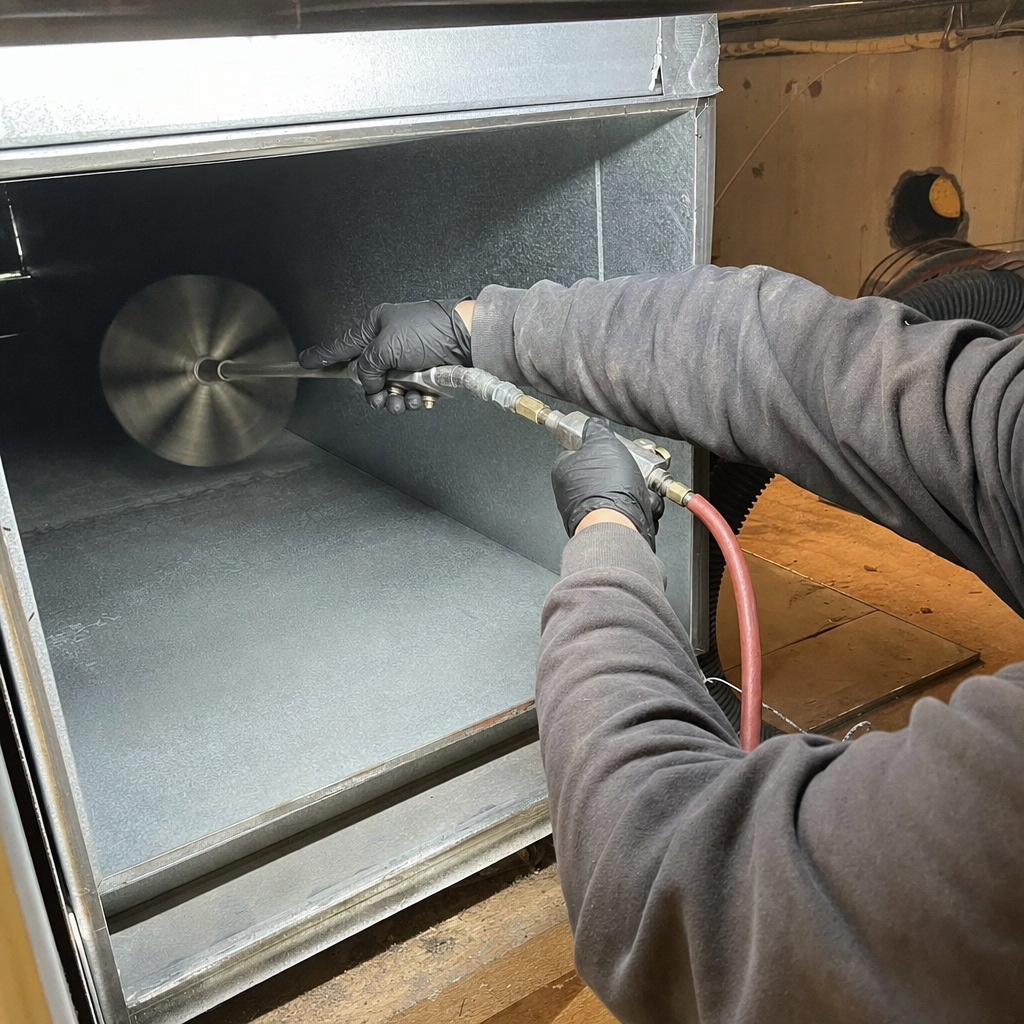
Plano’s attic heat doesn’t just waste energy — it actively destroys duct insulation. The R-6 fiberglass wrap on original flex duct systems degrades as the outer vapor barrier cracks and the inner plastic liner off-gasses under sustained thermal load. Once the insulation jacket is compromised, condensation forms on the supply duct in summer, creating mold-friendly conditions and further accelerating liner deterioration. We replace damaged insulation sections with new R-8 product where accessible, or recommend full flex duct replacement when the inner liner itself has become brittle. For Plano homeowners, this isn’t an aesthetic upgrade — it’s preventing the 15–20% efficiency loss that uninsulated or degraded duct imposes on your HVAC system.
Mastic Sealant Application
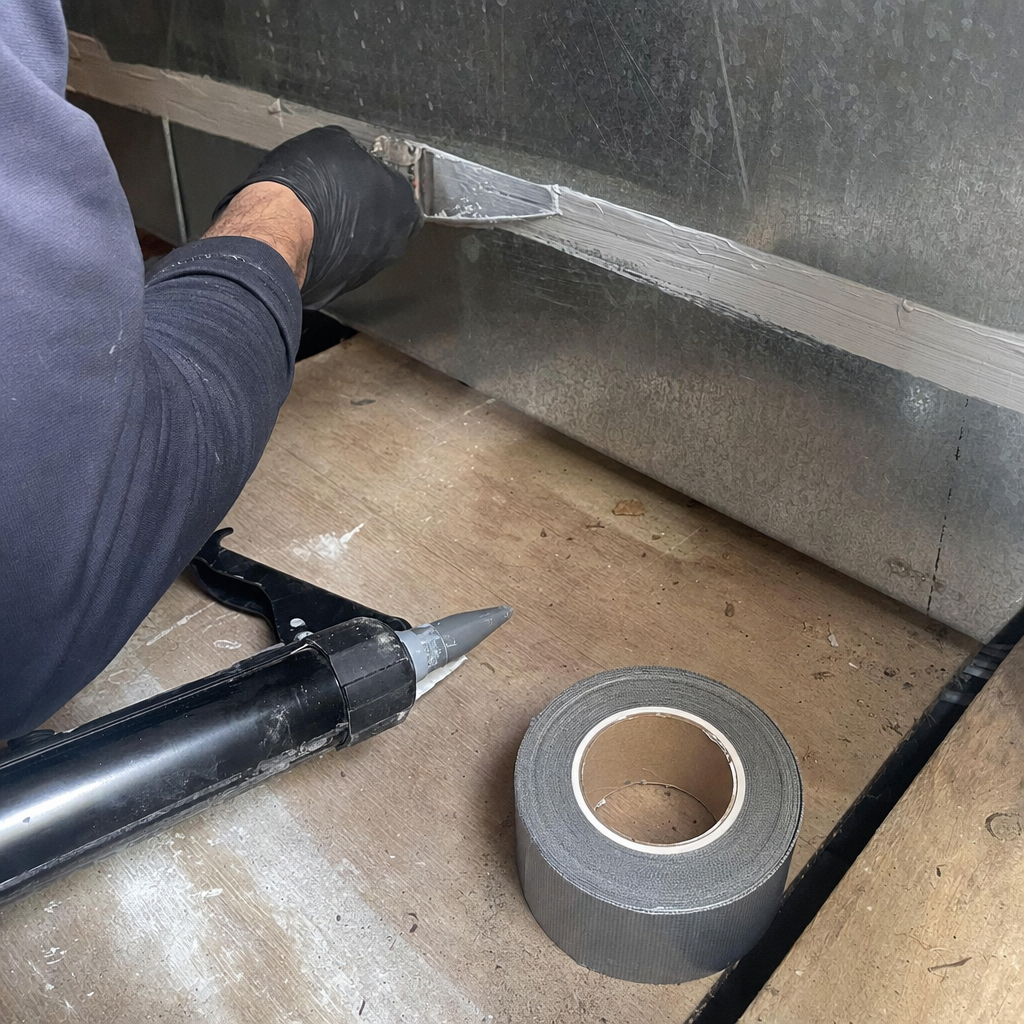
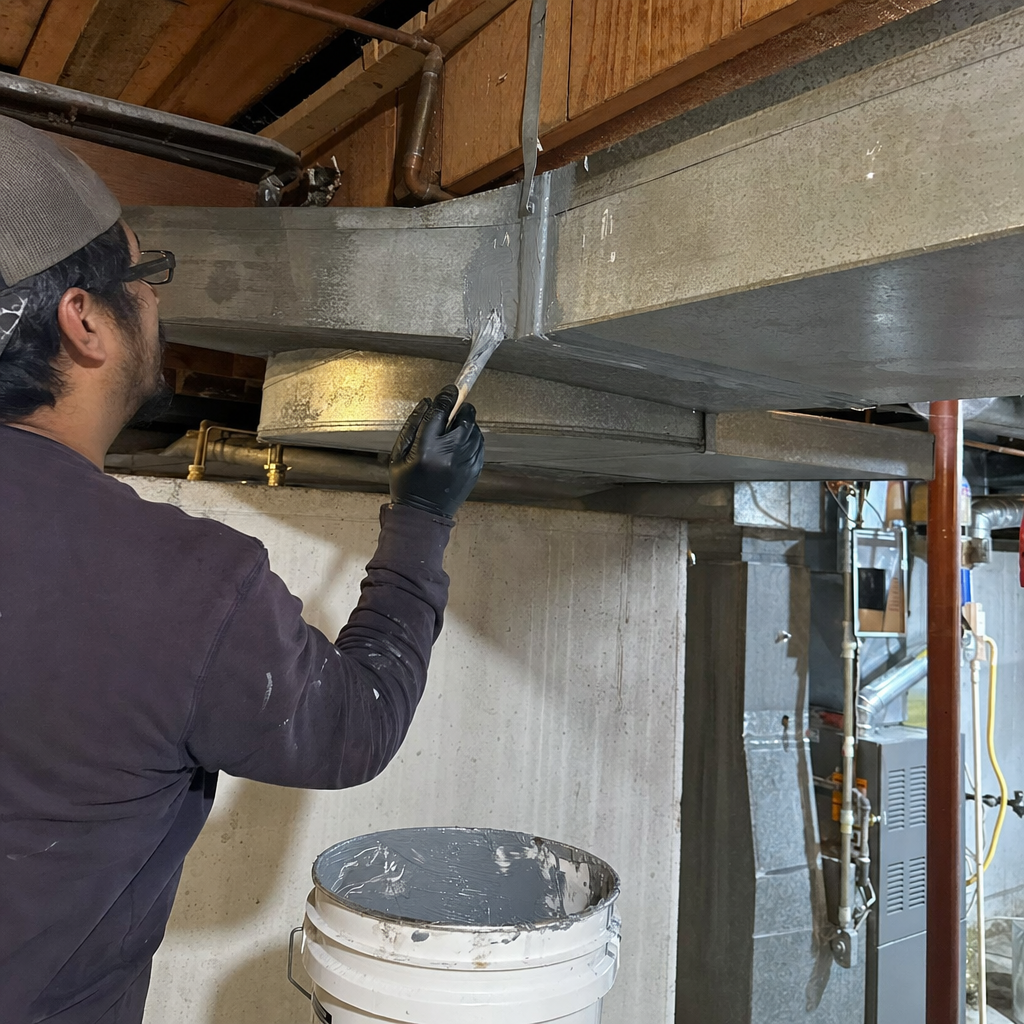
Brush-on mastic remains the professional standard for sealing duct joints in Plano’s conditions — superior to foil tape, which thermally degrades, and more reliable than aerosol sealants for accessible joint work. We apply Abatement Technologies and Nikro-compatible mastic products rated for 200°F continuous exposure, well above Plano’s worst attic temperatures. Mastic is particularly critical for the collar joints and plenum connections that fail first in foundation-shifted east Plano homes. Applied correctly with reinforcing mesh at stress points, it creates a permanent flexible seal that accommodates minor ongoing movement without cracking.
What happens when you call
- 1
A real person answersNo phone trees — you reach a local pro.
- 2
You get an upfront price rangeHonest numbers before anyone is dispatched.
- 3
A background-checked tech heads outLicensed & insured, dispatched right away.
- 4
You approve before work beginsNothing starts until you say go.
Trusted Brands We Service in Plano
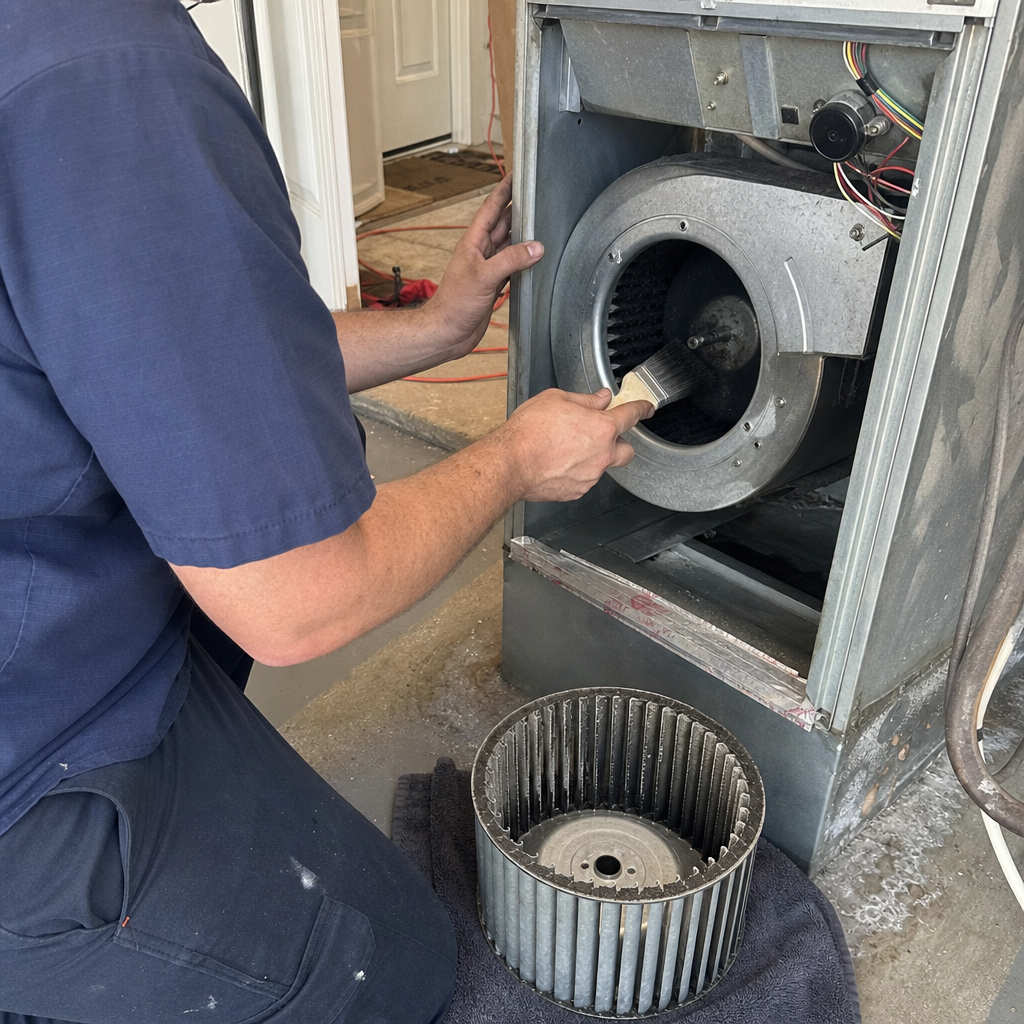
Our equipment roster includes Rotobrush, Nikro, Honeywell, and Abatement Technologies — the same brands specified by industrial air-quality contractors, not consumer-grade tools from hardware stores. For Plano repairs, we stock common flex duct diameters, collar fittings, and mastic compounds that match the original specifications of 1980s–1990s tract home installations. That parts availability means faster turnaround: most Plano repairs complete in a single visit without waiting on supplier orders. We also service Honeywell and Aprilaire zone control components common in west Plano’s multi-handler systems, diagnosing damper failures and control board issues that general HVAC technicians sometimes misattribute to “duct problems” when the ductwork itself is sound.
Common Duct Repair & Sealing Problems We See in Plano Homes
- Flex duct pulled apart at collar joints. The signature failure of east Plano’s 75074 and 75075 neighborhoods — decades of foundation shifting from Blackland Prairie clay soil stress the duct runs until the inner liner separates from its mechanical connection. We find this on roughly 40% of pre-1990 Plano homes we inspect.
- Insulation cracking and liner off-gassing in superheated attics. Plano’s 140–150°F summer attic temperatures accelerate what would be 20-year degradation into 12–15 year failure. The insulation wrap becomes brittle and powdery; the inner liner develops stress cracks that leak air long before a homeowner notices temperature problems.
- Unsupported flex duct sagging and kinking. Original east Plano tract installations frequently used support spacing twice the manufacturer’s maximum. Gravity and thermal cycling do the rest, creating low points that trap condensation in summer and block airflow year-round.
- Multi-zone balancing failures in west Plano executive homes. The 4,000–6,000 square foot properties near Legacy in 75093 and 75024 run complex systems with 3–5 air handlers and dozens of supply registers. When one zone underperforms, the root cause is often a disconnected or crushed flex branch in a remote attic run — not the zone damper the homeowner suspects.
Pricing for Duct Repair & Sealing in Plano, TX
Honest pricing for Plano’s market, based on jobs we’ve completed across the city’s ZIP codes:
| Service | Typical Range in Plano |
|---|---|
| Single joint/collar repair with mastic seal | $180–$280 |
| Flex duct section replacement (one run, attic accessible) | $280–$450 |
| Full attic flex duct inspection and spot repair (typical 1,800–2,400 sq ft home) | $450–$680 |
| Metal trunk line seam repair and resealing | $320–$520 |
| Duct insulation replacement (per linear foot) | $8–$14 |
| Whole-system pressure test with digital manometer documentation | $150–$220 (often waived with repair) |
What moves a Plano job toward the higher end: multiple attic access points requiring decking removal, extensive sag correction with new support straps, or homes with spray-foam encapsulated attics where access is restricted. West Plano’s larger multi-zone systems naturally require more labor than east-side single-handler homes. We provide exact written estimates before beginning work — call (888) 247-5308 to schedule a free assessment.
We Also Serve Cities Near Plano
Our service radius extends naturally to Lucas, Allen, Murphy, and Sachse — communities that share Collin County’s clay-soil geology and similar housing-stock timelines. Allen’s 75013 and 75002 ZIPs built out heavily in the 1990s–2000s; Murphy and Sachse include substantial 1980s inventory with the same flex-duct aging patterns we diagnose in east Plano. Lucas properties trend larger-lot custom builds with extended duct runs that present their own pressure-loss challenges. The same owner-operator accountability and equipment standards apply to every call.
Serving Plano, TX — Our Local Coverage Area
We’re based in the Plano area and know this community well. Use the map below to see our service coverage — if you’re nearby, we can almost certainly help.
FAQs — Duct Repair & Sealing in Plano
If your 1984 Plano home still has original flex duct, it’s 40+ years old — roughly double the industry’s 15–25 year functional lifespan. Repair is viable when the inner liner remains intact and failures are isolated to collar joints, support sag, or localized insulation damage. Full replacement becomes the better investment when we find multiple liner cracks, pervasive insulation degradation, or duct diameters undersized for your current HVAC capacity. We make this assessment with a full attic walk-through and pressure testing, not guesswork. Call (888) 247-5308 for a free evaluation — we’ll show you exactly what the camera and manometer reveal.
Cedar fever itself doesn’t damage duct materials, but the heavy pollen load it forces through your system each December through February accelerates filter loading and can increase static pressure against already-weakened joints. The real concern is that Plano homeowners running heating constantly during cedar fever season are circulating air through compromised ductwork at exactly the time they’re most sensitive to airborne particles. Leaky return ducts in unconditioned spaces pull attic dust and insulation fibers into the airflow. Sealed, intact ductwork matters more during cedar fever than any other season. If your allergies spike indoors every winter, duct leakage is a likely contributor.
Yes — specifically because of Plano’s attic heat. Uninsulated or degraded duct in a 145°F attic loses 15–20% of its cooling capacity before the air reaches your registers. That forces longer compressor runtimes, accelerates HVAC wear, and shows up on your electric bill. For east Plano homes with accessible attic duct, insulation repair or replacement typically pays back in 18–30 months of reduced cooling costs. We calculate actual savings potential during our assessment using your duct dimensions, attic temperature readings, and current utility rates.
Significantly. West Plano’s multi-zone systems require zone-by-zone pressure balancing to avoid over-conditioning one area while starving another. A disconnected flex branch in a 75093 home with four air handlers might only affect the master suite zone — but diagnosing it requires checking multiple attic access points and understanding the zone control logic. East Plano’s single-handler systems are mechanically simpler, though often in worse physical condition. Our approach adapts to both: detailed zone mapping for west Plano, structural repair emphasis for east Plano’s aging flex.
No — not if the underlying cause is foundation movement and inadequate support spacing, which is the typical scenario in Plano’s 75074 and 75075 neighborhoods. Mastic seals the joint, but without mechanical re-securing and improved support straps, the same flex duct will sag and stress the repair within a season or two. We treat collar joint failures with a three-step correction: mechanical fastening with draw bands or screws, mastic sealant with reinforcing mesh for flexibility, and corrected support spacing to eliminate the sag that caused the failure. Anything less is a temporary patch, not a repair.
Written by Jerry Sanders, Owner and Lead Technician at Beacon Air Duct Cleaning Service Dallas Fort Worth, serving Plano and the Dallas-Fort Worth metroplex since 2010.